Different businesses. Different challenges. One digital mindset.
Every industry operates differently. We learn those differences first, then build the technology, content and growth solutions around them.
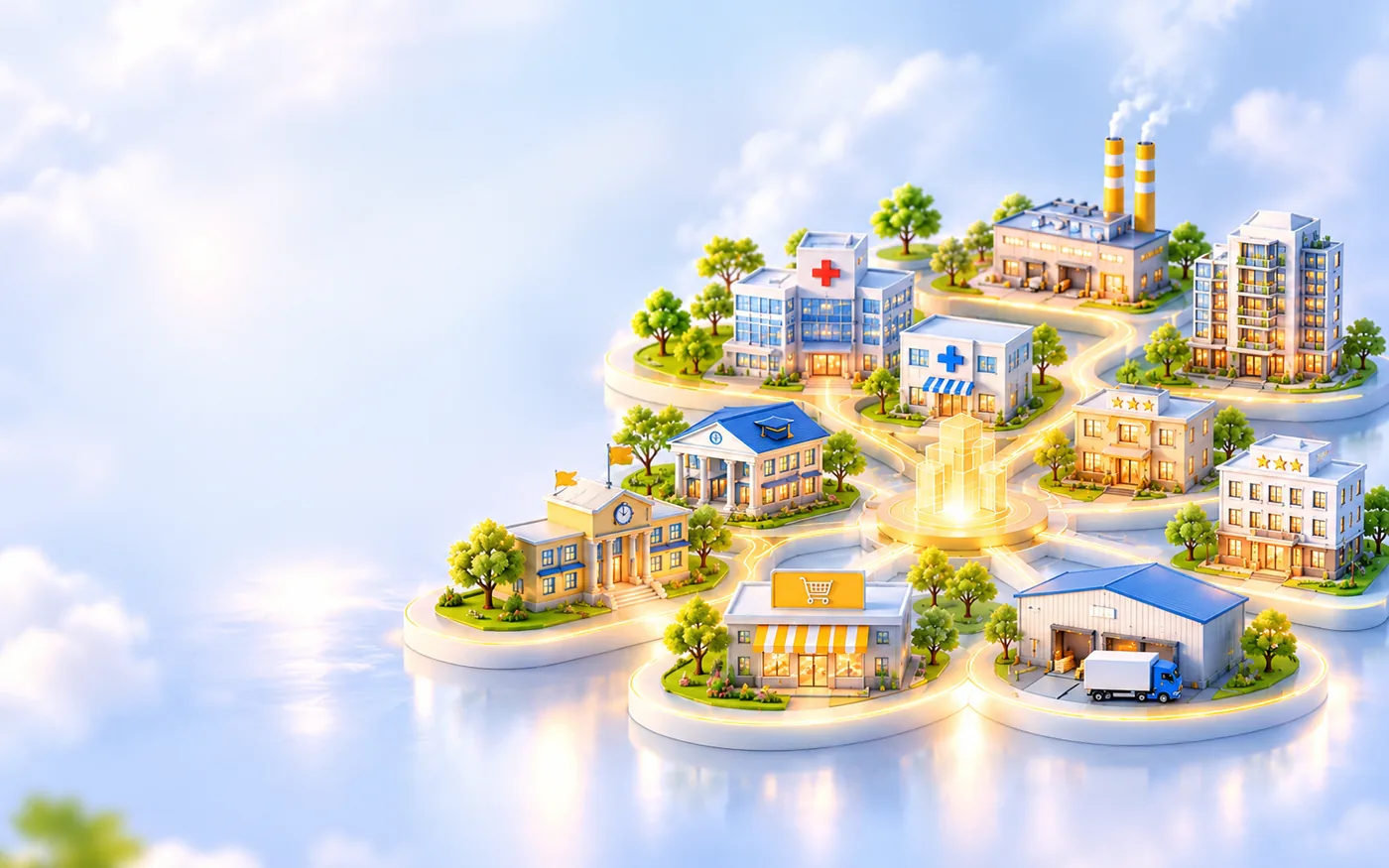

Every sector has the same story: paper and phone calls, then a system.
The before and after we see most often.
- Admissions on paper and phone calls One funnel, tracked and followed up
- Appointment books and walk-in queues Booking, reminders and follow-up that run themselves
- Production figures written at shift end Live shop-floor dashboards
- Leads lost between site visit and booking A CRM that follows every buyer
- Stock that is wrong in the system One inventory across every store
- Dealers who phone for price and stock A portal they order from, any hour

The system each one has needed for years.
Each tile opens a page on what we build for that sector.
Schools
School ERP, admissions and parent apps
02Colleges
Campus automation and student portals
03Hospitals & clinics
Hospital, clinic and patient management
04Manufacturers
Production, quality and inventory systems
05Real estate
CRM, sales and property portals
06Retail chains
POS, inventory and loyalty
07Logistics
Fleet and shipment tracking
08Hotels
Booking and guest management
09Distributors
Dealer portals and order management
10SMs
ERP, CRM and workflow automation
11Professional services
Client portals and document automation
12Financial services
Reporting and workflow systems, built to your compliance rules

Three sectors with a dedicated practice.
Sector software for institutions and operators whose problems are specific and whose vendors are not.
Education Technology
Admissions, fees, communication and learning for schools and colleges, on one platform parents and staff will actually use.
D.02Healthcare Digital Transformation
Hospital and clinic operations, appointments and patient engagement, with the data kept where it belongs.
D.03Manufacturing & Industrial Software
What the shop floor is doing, on a screen: production, quality, maintenance and supply chain.

The acronyms every sector uses.
What the letters on a software quote stand for.
- ERP
- Enterprise resource planning: one system for finance, stock, purchasing and projects.
- LMS
- Learning management system: where courses, content and assessments live.
- SIS
- Student information system: admissions, records, attendance and results.
- HMS
- Hospital management system: registration, billing, wards and pharmacy.
- EMR
- Electronic medical record: a patient’s clinical history, held digitally.
- MES
- Manufacturing execution system: tracks work on the shop floor as it happens.
- WMS
- Warehouse management system: where stock is, and how it moves.
- TMS
- Transport management system: planning, dispatch and tracking of shipments.
- PMS
- Property management system, as used by hotels for bookings and rooms.
- POS
- Point of sale: the till, connected to stock and customer records.
- OMS
- Order management system: orders from every channel, handled in one place.
- DMS
- Dealer management system: how a manufacturer manages orders and stock across its dealers.
A pod owns the outcome, not a ticket.
-
Discover
We begin with where the business is losing time, customers or revenue, not with a favourite technology.
-
Architect
A solution architect fixes scope, stack, milestones and the team the work needs, in writing.
-
Build
A pod of five or six — technical lead, engineers, a data or domain specialist, design and QA — owns the outcome.
-
Deploy
Tested, written up and taught to the team that will use it every day, with training rather than a login.
-
Run
Fixes, upgrades, hosting and support on a monthly agreement, so the system keeps getting better.

Not on the list? Tell us the problem anyway.
One conversation, with someone who can scope the work. You leave with a view of what to build first, whether or not you build it with us.